
MICROSOFT
Microsoft Azure, along with Microsoft's software as a service effort, and footprint in enterprises make it a strong No. 2 to AWS. As enterprises pick preferred cloud vendors, Microsoft will be an option. The cheap and easy storyline is that Microsoft Azure and AWS are on a collision course to be the top cloud service provider. The reality is that the two foes barely rhyme. Here's why:
There is still no publicly available data on Azure sales. Azure is the part of Microsoft's cloud business that most rhymes with AWS, but is buried in the commercial cloud.
Commercial cloud is a roll-up of multiple services from Microsoft.
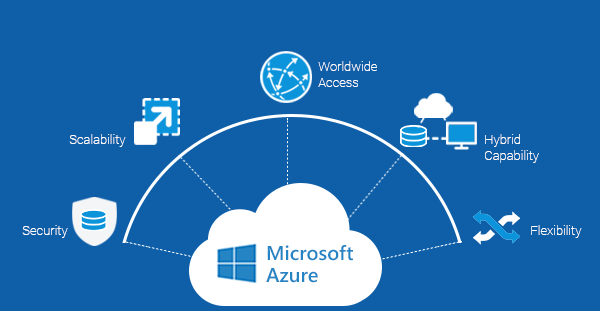
Enterprises are likely to buy a buffet that includes Azure but isn't totally focused on it. That said, Microsoft's commercial cloud is on a $53.2 billion annual revenue run rate in the third quarter, up from $50 billion in the second quarter. Microsoft Azure benefits from its software-as-a-service footprint. The reality is that we could easily take Microsoft out of the IaaS category and put it in the SaaS section since most of the revenue is derived from Office 365, Dynamics, and a bevy of other cloud services that are software-based over infrastructure. Nevertheless, Azure and its AI, machine learning, and history in the enterprise make it formidable. Azure has edge computing efforts. The COVID-19 pandemic provided rocket fuel to Microsoft's cloud business as a bevy of enterprises used Microsoft Teams for remote work. In addition, Microsoft wrestled with capacity issues due to demand.
IBM
IBM
Big Blue looks to Red Hat to juice hybrid cloud deployments and growth. With a $34 billion bet on the Red Hat acquisition, IBM is hoping to juice its revenue growth. IBM outlined the rationale for the $34 billion Red Hat purchase and its strategy for turbo-charging its growth in the future. The fourth quarter revealed the potential of the Red Hat deal and the first quarter revealed some momentum.
Why is IBM and Red Hat a good combo? Rometty noted that IBM runs 90% of the credit card transactions globally, builds mission-critical apps, and has the installed base of workloads. Red Hat brings the vehicle to chapter two of the cloud. "This takes great incumbency to this journey," said Rometty. "You have to have trusted relationships with 30,000 clients and an understanding of the processes."
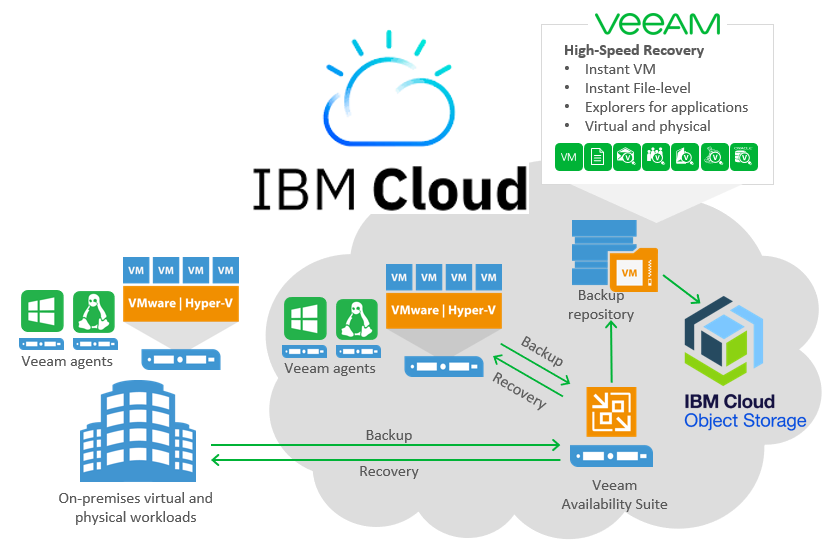
IBM also outlined a leadership change that cements the company's multi-cloud and hybrid focus. Arvind Krishna became CEO effective April 6 and outlined his approach and overall strategy. Krishna is the architect of the Red Hat purchase and runs Big Blue's cloud and cognitive software unit. For good measure, James Whitehurst, CEO of Red Hat, becomes IBM President. Rometty will serve as executive chairman through 2020 and then retire. Add it up and two executives with cloud, open-source, and hybrid cloud experience will be running IBM.
Meanwhile, Google Cloud Platform has been building out partnerships with key enterprise players such as Salesforce, Informatica, VMware, and SAP. The company is also combining its G Suite and Google Cloud sales efforts. At the start of 2019, Google said cloud revenue was evenly split between the two product lines. It's unclear whether that revenue split holds today.
The Google Cloud Platform strategy requires a team that can sell vertically and competes with the sales know-how from AWS and Microsoft. Kurian has surrounded himself with enterprise software veterans. (See: Former Microsoft exec Javier Soltero to lead the Google G Suite team)
A recent hire is Hamidou Dia as Google Cloud's vice president of solutions engineering.

Hamidou was most recently Oracle's chief of sales consulting, consulting, enterprise architecture, and customer success. Google Cloud also named John Jester vice president of customer experience. Jester will lead a services team focused on architecture and best practices. Jester was most recently corporate vice president of worldwide customer success at Microsoft.
Also: What makes Google Cloud Platform unique compared to Azure and Amazon
The additions of Dia and Jester come as Rob Enslin joined Google Cloud as president of global customer operations. Enslin was formerly at SAP.
At Google Cloud Next, the company forged more ties with hybrid cloud players via an effort called Anthos, outlined its industry efforts, and leveraged its artificial intelligence know-how. And Anthos is seen as Google Cloud's big multi-cloud and hybrid cloud play. Anthos is Google Cloud's effort to target digital transformation and hybrid cloud deployments.
AI, machine learning, and analytics are the upsell opportunities for Google Cloud Platform compute and storage. Google will buy companies like Looker to fill out their analytics efforts.


0 Comments